

 ChatGPT
 Perplexity
 Grok
Grok
 Google AI
Getting leads is only the first of the sales challenges. The next challenge involves assigning them correctly. Manual lead assignment can create delays and confusion. Some leads may also reach the wrong salesperson. These mistakes can reduce response speed and sales opportunities. Automated lead routing creates a clearer process. It sends each lead where needed.
What Is Lead Routing?
Lead routing determines where new leads should go. It connects incoming enquiries with suitable sales representatives. Businesses can define rules for making these decisions. Those rules can consider location, service, value, or source. A clear routing process removes unnecessary manual work. Sales teams receive leads without checking every submission.
Why Lead Assignment Needs Clear Rules
Without rules, teams often assign leads manually. This becomes difficult as lead volume increases. Managers may spend valuable time sorting enquiries. Leads can also remain unattended during busy periods. Clear lead assignment rules create consistent decision-making. Each lead follows the same agreed process. Sales representatives receive opportunities matching their responsibilities.
For businesses looking to improve broader sales workflows, CRM Integration: Why Every Business Needs It offers useful guidance. Strong connections between forms and CRM systems support smoother lead management.
Decide What Should Control Lead Distribution
Before automating anything, define your routing criteria. Different businesses need different assignment priorities. Start with information already collected through forms.
Common routing criteria include:
- Geographic location
- Product or service interest
- Customer type
- Lead value
- Sales territory
- Marketing source
- Company size
- Existing account ownership
Keep your criteria simple at first. Too many rules can create unnecessary complexity. Review the process after collecting real routing data.
Popular Ways to Assign Sales Leads
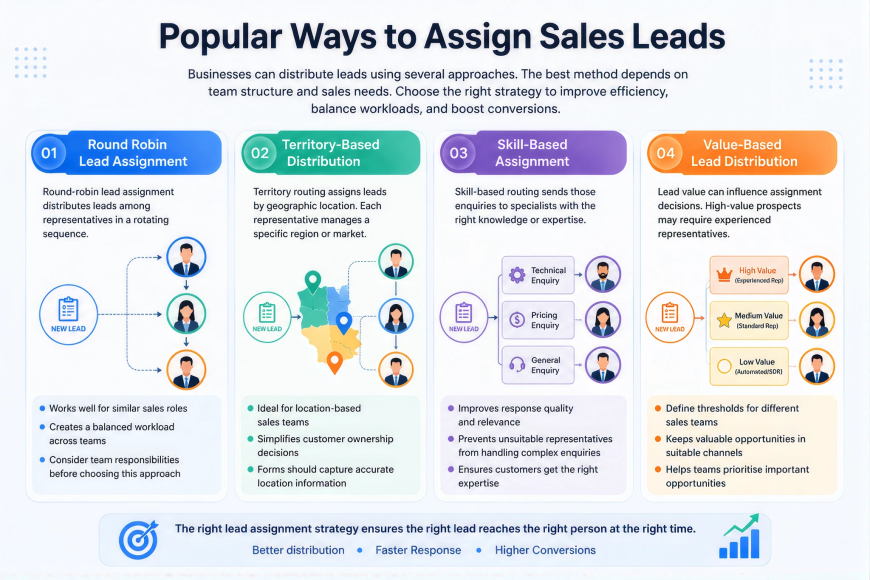
Businesses can distribute leads using several approaches. The best method depends on team structure and sales needs. Some companies need balanced distribution across representatives. Others need specialist assignment based on lead characteristics.
Round Robin Lead Assignment
Round-robin lead assignment distributes leads among representatives. Each salesperson receives leads in a rotating sequence. This method works well for similar sales roles. It can create a balanced workload across teams. However, different territories may require specific routing rules. Consider team responsibilities before choosing this approach.
Territory-Based Distribution
Territory routing assigns leads by geographic location. Each representative manages a specific region or market. This approach works well for location-based sales teams. It can significantly simplify customer ownership decisions. Sales representatives clearly understand their assigned territories. Forms should therefore capture accurate location information.
Skill-Based Assignment
Some leads require specific knowledge or expertise. Skill-based routing sends those enquiries to specialists. Technical enquiries may need technical sales representatives. This approach can improve response quality and relevance. It also prevents unsuitable representatives from handling complex enquiries.
Value-Based Lead Distribution
Lead value can influence assignment decisions. High-value prospects may require experienced representatives. Lower-value enquiries may follow standard routing rules. Businesses can define thresholds for different sales teams. This keeps valuable opportunities within suitable sales channels. It also helps teams prioritise important opportunities.
A Simple Automated Lead Routing Workflow
Effective routing does not need complicated processes. Most workflows follow several clear stages. The form first captures information from the visitor. The system then evaluates predefined assignment rules.
A basic workflow looks like this:
Lead submits form → Data is checked → Rules are evaluated → Sales rep is selected → Lead is assigned → Notification is sent
Each stage should happen automatically where possible. This reduces delays between submission and sales follow-up.
Match Lead Data With Assignment Rules
Your routing system depends on reliable lead information. Incorrect data can send leads to unsuitable representatives. Forms should therefore collect useful routing information. A service form might ask visitors about interests. Their answers could identify the appropriate sales team. A location field could determine regional ownership.
Avoid collecting information without a clear purpose. Every routing field should support an actual decision. This keeps forms shorter and routing rules easier.
Connect Lead Routing With Your Sales Tools
Automation becomes stronger when systems share lead information. Forms can submit to connected sales platforms. This reduces manual copying between different tools. LeadX Forms supports connections with business applications. These connections can support smoother sales workflows.
For example, What Happens After Someone Submits Your Form? explains important post-submission steps. Those steps can determine how quickly businesses respond.
How Lead Routing Improves Sales Response Times
Speed matters when prospects show buying interest. Delayed responses can give competitors valuable opportunities. Automated routing reduces the time before assignment. Sales representatives can receive leads immediately after submission. Notifications can also alert them about new opportunities.
Faster assignment also improves internal visibility. Managers can see whether leads receive timely attention. Teams can identify delays before they become larger problems.
Use Lead Scoring Before Assignment
Not every lead has the same sales potential. Some prospects show stronger buying intent than others. Lead scoring can help identify these differences. Businesses can score leads using selected information. Factors might include service interest or company size.
Higher scores can trigger priority assignment rules. AI can also support lead prioritisation. Using AI to Prioritise High-Quality Leads explains how businesses can focus attention. Combining prioritisation with routing can strengthen sales workflows. Keep scoring simple and easy to understand.
Where Lead Routing Commonly Goes Wrong
Automation only works when businesses create sensible rules. Poorly designed rules can create new workflow problems. Common issues include overlapping conditions and missing information.
Other problems may include:
- Sending leads to unavailable representatives
- Creating too many routing conditions
- Using incomplete form information
- Ignoring representative capacity
- Failing to review routing performance
- Keeping outdated ownership rules
Test every routing path before launching automation. Submit different lead types during testing. Confirm that each lead reaches its intended destination.
Build a Routing Process That Can Scale
Your routing system should support future growth. Lead volume may increase as marketing campaigns expand. Sales teams may also grow or change responsibilities. Keep assignment rules organised and easy to update. Document why each major rule exists. Review distribution patterns regularly.
Smart forms can also improve routing flexibility. Smart Forms vs Traditional Forms: Which Performs Better? explores smarter approaches to lead generation. Better form logic can provide cleaner routing information.

Where LeadX Forms Fits Into Lead Routing
LeadX Forms helps businesses capture and manage website leads. Its dashboard keeps submissions organised and accessible. The platform also supports workflow automation and integrations. Businesses can collect information needed for routing decisions. They can then connect lead data with existing tools.
The right setup depends on your sales structure. Start with simple routing rules and clear ownership. Add more conditions only when business needs require them.
Conclusion
Effective lead routing connects prospects with suitable sales representatives. Clear rules make lead distribution faster and more consistent. Automation also reduces manual work for sales managers. Start with simple criteria and reliable lead information. Then test, measure, and improve your routing process. A clear system helps every lead reach the right person.
Frequently Asked Questions
Lead routing assigns incoming leads to suitable sales representatives. Businesses use rules based on specific lead information. These rules create faster and more consistent assignments.
Automated lead routing uses software to assign leads. The system evaluates predefined rules automatically. It then sends each lead to the appropriate representative.
Round robin assignment distributes leads in a rotating sequence. Each representative receives opportunities in an organised order. This method can balance workloads across similar sales teams.
Useful rules depend on your sales structure. Common options include location, service, value, and lead source. Choose criteria supporting clear ownership decisions.
LeadX Forms supports lead management, automation, and integrations. Businesses can connect captured leads with other tools. This can support more organised sales workflows.