 ChatGPT
 Perplexity
 Grok
Grok
 Google AI
Getting someone to become a lead is only the beginning. A person may fill out a form, download a resource, request information, or subscribe to your updates without being ready to buy. Expecting every new lead to convert immediately can lead to missed opportunities.
Lead nurturing helps businesses stay connected with prospects as they move through the buying journey. Instead of repeatedly pushing for a sale, you can provide useful information, respond to their interests, and build trust over time. With the right approach, early interest can become qualified opportunities and eventually turn into customers.
What Is Lead Nurturing and Why Does It Matter?
Lead nurturing is the process of building relationships with potential customers through relevant, timely communication. It focuses on prospects who have shown interest in a business but are not yet ready to purchase.
Nurturing can include educational content, personalised emails, follow-ups, product information, case studies, and other interactions. The goal is to give prospects useful reasons to remain engaged while helping businesses understand their needs and buying intent.
Why Leads Need More Than a Single Follow-Up
Lead generation brings potential customers into your sales funnel, but it does not guarantee they will move further along. Some leads need more information, others may be comparing solutions, and some simply need more time before deciding. Without continued engagement, even interested prospects can lose interest or choose another provider.
What happens after a prospect submits their information can significantly affect the relationship. What Happens After Someone Submits Your Form Explores the importance of the post-submission experience and how businesses can respond more effectively.
A consistent nurturing process keeps your business relevant while giving marketing and sales teams more insight into prospect behaviour. Instead of treating every contact as an immediate sales opportunity, you can identify which leads are becoming more engaged and determine the right time to take the next step.
From First Interaction to Purchase: How Lead Nurturing Works
A prospect’s needs change as they move closer to a purchase. Someone discovering a problem for the first time needs different information than someone comparing products or preparing to decide. A good nurturing process reflects these changing needs.
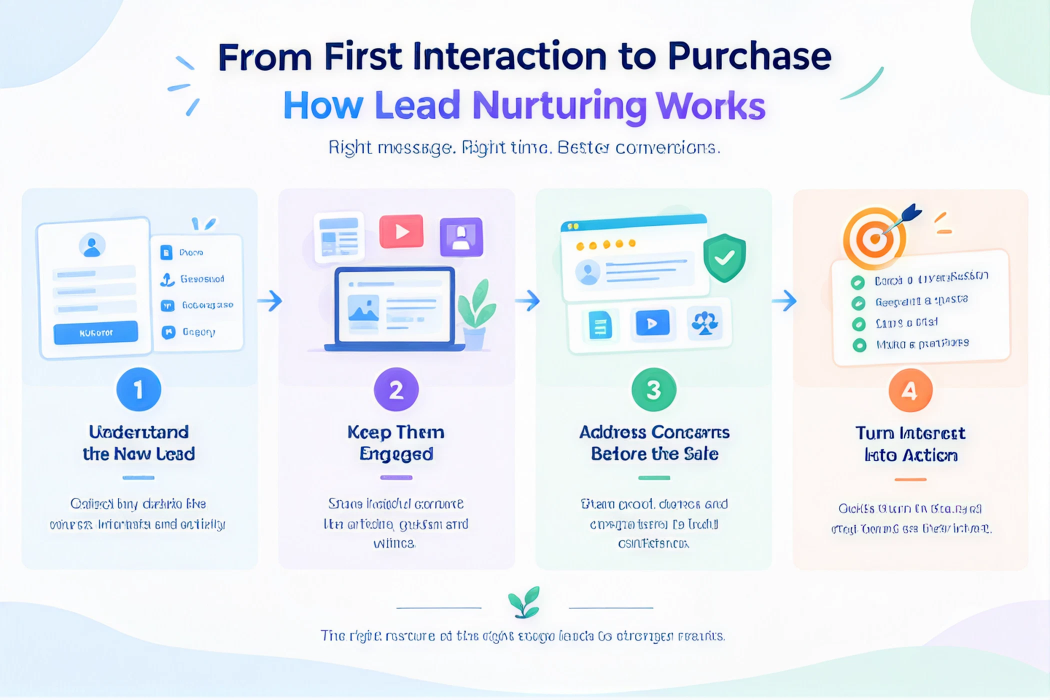
Start by Understanding the New Lead
The journey begins when someone becomes a known lead through a form submission, download, subscription, or enquiry. At this stage, collect enough information to understand the prospect without making the first interaction unnecessarily complicated. Their source, interests, and initial activity can provide useful context for future communication.
Give Prospects a Reason to Stay Engaged
New leads often need help understanding their problem and the solutions available. Educational articles, guides, videos, webinars, and other resources can answer questions without immediately pushing a sales message. Useful content builds credibility and gives prospects a reason to continue interacting with your business.
Address Concerns Before Asking for the Sale
As prospects become more interested, they may start to question whether your solution is reliable, suitable, affordable, or preferable to competing options. Case studies, testimonials, demonstrations, comparisons, and product information can address these concerns. Removing uncertainty makes it easier for prospects to evaluate your offering with confidence.
Recognise When a Prospect Is Ready
The final stage helps an engaged, qualified prospect take action. This might involve booking a consultation, requesting a quote, scheduling a demo, starting a trial, or making a purchase. The next step should match the prospect’s level of intent rather than forcing every lead into the same sales process.
Building a Lead Nurturing Strategy That Fits Your Audience
A strong lead nurturing strategy starts with an understanding of your audience and its buying journey. Rather than creating one sequence for everyone, identify different prospect types and the questions they are likely to have at each stage.
Your strategy should then connect content, communication channels, timing, and actions into a clear journey. Each interaction should have a purpose, whether to educate a new lead, increase engagement, address objections, or prepare a qualified prospect for a sales conversation.
Segment Leads Before You Start Nurturing
Segmentation helps businesses avoid sending the same messages to every contact. Group leads by factors such as industry, role, interests, acquisition source, previous interactions, or buying intent. This makes it easier to deliver communication that reflects what each group actually needs.
Match Content to Buying Intent
Early-stage prospects may need educational resources, while people closer to a purchase may want pricing information, comparisons, customer examples, or demonstrations. Matching content to intent prevents businesses from asking for a purchase before prospects have enough information to decide.
Let Prospect Behaviour Guide Follow-Ups
Follow-ups should reflect what prospects are doing rather than relying entirely on a fixed schedule. Someone repeatedly viewing product information may need a different message from someone who has only downloaded an introductory guide. Behavioural signals can make communication more timely and relevant.
How Lead Nurturing Automation Keeps Prospects Moving
Manually following up with every lead becomes difficult as the number of prospects grows. Lead nurturing automation allows businesses to create workflows that send messages or trigger actions based on specific conditions.
For example, a new contact might receive a welcome message after submitting a form and then enter a relevant content sequence. If that person later requests a demo, the workflow can change to deliver more sales-focused communication. Automation creates consistency while letting teams focus on higher-value conversations.
Trigger Follow-Ups From Real Actions
Lead follow-up automation can respond to actions such as form submissions, downloads, email engagement, page visits, or demo requests. Instead of relying on someone to remember every follow-up, these actions can automatically trigger an appropriate response. This helps reduce delays when a prospect is actively engaged.
Use Lead Data to Make Automation More Relevant
Automated communication does not need to be identical for every prospect. Information collected during lead interactions can help determine the next message, resource, or follow-up. Using interests, previous actions, and form responses can create a more relevant experience without requiring manual communication at every stage.
What Makes a Lead Nurturing Campaign Actually Work?
An effective lead-nurturing campaign requires a clear audience, purpose, sequence, and desired outcome. Every message should provide value rather than simply repeat a sales pitch. The campaign should gradually help prospects understand their problem, evaluate potential solutions, and decide whether your offering is right for them.
Timing matters just as much. Too many messages can overwhelm prospects, while long gaps can make them forget about your business. Test different topics, formats, calls to action, and follow-up intervals to discover what keeps your audience engaged.
Connecting Lead Nurturing With Better Lead Management
Lead nurturing becomes easier when information is organised throughout the customer journey. A structured lead management process helps teams understand where contacts came from, what they have interacted with, how engaged they are, and what should happen next.
This also improves coordination between marketing and sales. Marketing can identify leads showing stronger interest, while sales representatives can see useful context before starting a conversation. Lead Tracking From Form Submission to Sale shows how tracking lead activity can help businesses understand what happens between the initial form submission and a potential sale.
A connected process reduces unnecessary back-and-forth and gives teams a clearer view of where each prospect stands.
When Should a Lead Move From Nurturing to Sales?
Not every engaged lead is automatically sales-ready. A prospect may open emails, read articles, or download resources without having an immediate intention to purchase. The key is to evaluate multiple signals instead of relying on a single interaction.
Stronger indicators can include requesting a demonstration, asking about pricing, submitting a detailed enquiry, repeatedly viewing product pages, or engaging with high-intent content. Once a lead meets your qualification criteria, you can pass it to sales for a more personalised conversation.
How Sales Funnel Automation Supports the Journey
Sales funnel automation connects the different stages of the customer journey, from capturing new contacts to qualifying and following up with potential customers. When combined with lead nurturing, it can create a more organised path through the sales funnel.
For example, a new lead can enter a nurturing sequence after submitting a form. Continued engagement can trigger additional communication or qualification steps. Once the prospect reaches the appropriate stage, sales can take over with a direct conversation.
A well-connected funnel reduces gaps between marketing and sales while helping prospects move forward without unnecessary delays.
Turning Lead Nurturing Into Better Conversions
The ultimate purpose of nurturing is not simply to generate more engagement. It helps qualified prospects move closer to a purchase. This requires businesses to connect nurturing activities with the actions that indicate genuine buying intent.
Strong lead capture is an important starting point because the quality of information collected can affect what happens later. Best Lead Capture Strategies for Small Businesses provides additional guidance on capturing potential customers more effectively from website traffic.
Once you have useful information, nurturing can build on it through relevant communication, timely follow-ups, and appropriate sales actions.
How to Measure and Improve Your Nurturing Results
Measure the success of a nurturing process by what happens after leads enter it. Useful metrics can include engagement rates, repeat interactions, qualified leads, sales opportunities, conversion rates, and revenue generated from nurtured contacts.
Do not focus only on individual campaign numbers. Look at the complete journey. If prospects engage with educational content but rarely become sales opportunities, you may need to improve your later-stage communication. If leads disappear early, your initial content, segmentation, or follow-up timing may need attention.
Regular analysis helps identify these gaps and provides businesses with a clearer path to improve their lead-nurturing strategy.
How LeadX Forms Can Support Lead Nurturing
LeadX Forms helps businesses capture and manage information from website visitors through smarter forms. The information collected through forms can provide useful context for understanding leads and deciding how to follow up.
When businesses integrate form data into broader workflows, they can create a more organised process from the first interaction through qualification and follow-up. This can reduce manual work while helping teams respond to leads more efficiently.
For businesses focused on turning website visitors into qualified opportunities, combining effective lead capture with a structured nurturing process can create a stronger path from initial interest to sale.
Conclusion
Lead nurturing helps businesses bridge the gap between capturing a lead and making a sale. Instead of expecting prospects to purchase after their first interaction, it creates a structured journey where businesses can educate, engage, build trust, and respond to changing levels of interest.
The strongest approach combines relevant content, thoughtful segmentation, timely follow-ups, and automation where it adds value. When businesses understand what prospects need at each stage and know when to involve sales, they can create a smoother buying experience.
With a clear strategy and consistent optimisation, lead nurturing can help businesses build stronger relationships, improve lead quality, and convert more qualified prospects into customers.
Frequently Asked Questions
Lead nurturing is the process of building relationships with potential customers through relevant and timely communication. It helps prospects move through the buying journey until they are ready to take the next step.
Lead generation focuses on attracting and capturing potential customers, while lead nurturing focuses on developing relationships with those leads after they enter your database. Lead generation creates opportunities, while nurturing helps move those opportunities toward conversion.
The ideal length depends on your sales cycle, audience, product, and buying process. Some prospects may need only a few days of communication, while complex purchases can require several weeks or months of nurturing.
Nurturing keeps prospects engaged by providing relevant information throughout their buying journey. By answering questions, building trust, and recognising buying intent, businesses can move qualified prospects toward purchase more effectively.
Lead nurturing automation uses predefined workflows to deliver follow-ups and other actions based on lead information or behaviour. It helps businesses communicate consistently without manually managing every interaction.