 ChatGPT
 Perplexity
 Grok
Grok
 Google AI
Businesses need reliable ways to prioritise incoming leads. Not every prospect deserves immediate sales attention. Some show strong intent through repeated actions. Others need more information before considering a purchase. Lead scoring helps teams distinguish between these opportunities. Manual and predictive methods approach this task differently. Understanding that difference can improve sales efficiency.
Manual lead scoring depends on predefined rules and judgement. Predictive lead scoring uses data and behavioural patterns. Both approaches can support effective qualification processes. However, their strengths change as businesses grow. Larger pipelines create more signals for teams. Customer journeys also become harder to evaluate manually.
What Is Manual Lead Scoring?
Manual lead scoring assigns points using predefined qualification criteria. Teams decide which characteristics suggest stronger buying potential. These characteristics may include company size and industry. Job roles can also influence individual lead scores. Website visits may earn additional points. Email engagement can also increase overall lead scores. Teams then combine these points into one score. Sales representatives review scores before contacting potential customers.
This approach gives businesses straightforward control over qualification. Teams can understand why prospects receive certain scores. They can also adjust rules when priorities change. Manual systems work particularly well within simpler sales funnels. Smaller businesses often have fewer qualification variables. Their customer journeys may also remain relatively predictable. However, maintaining scoring rules requires regular human involvement. Changing buyer behaviour can make old rules ineffective. High lead volumes can also create significant workloads.
What Is Predictive Lead Scoring?
Predictive lead scoring uses data to identify conversion patterns. It examines behaviours across different customer interactions. These behaviours can include website visits and content engagement. Historical conversion outcomes provide important predictive context. The system compares current prospects against previous outcomes. It then estimates which leads show stronger potential. This creates a more dynamic scoring approach. Predictive systems can analyse numerous signals simultaneously.
The main advantage involves broader behavioural analysis. Predictive models can identify relationships humans might overlook. They can evaluate signals across complex customer journeys. This can provide deeper insight into buying intent. However, predictive systems depend heavily upon quality data. Poor information can reduce prediction reliability. Businesses should keep lead records accurate and relevant. Regular reviews can also identify model performance issues.
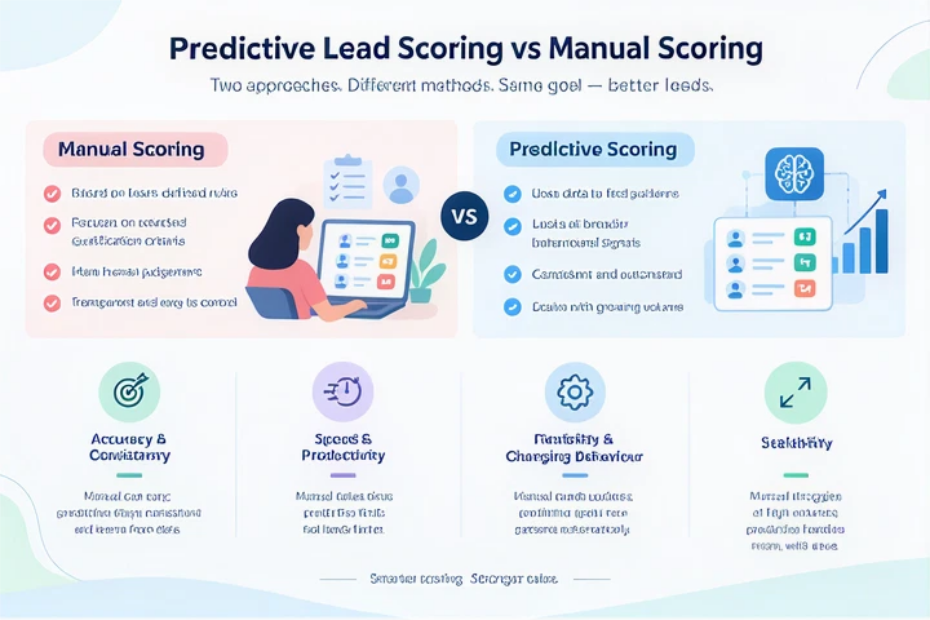
Predictive Lead Scoring vs Manual Scoring
The biggest difference involves how prospects are evaluated. Manual lead scoring follows rules created by teams. Predictive scoring identifies patterns using available customer data. Manual models focus on selected qualification characteristics. Predictive models can consider broader behavioural information. This difference becomes important as lead volumes increase. Complex journeys create more signals requiring careful analysis. Both approaches can support effective lead qualification. However, their strengths vary by business situation. Manual scoring offers transparency and direct human control. Predictive scoring provides greater analytical depth and scalability.
Accuracy and Consistency
Manual scoring can produce inconsistent results across team members. Different reviewers may interpret criteria differently during qualification. Even documented rules can leave room for judgement. Predictive models apply consistent calculations across incoming prospects. Every lead is evaluated using the same model. This can reduce scoring variations across larger teams. However, predictive accuracy depends upon reliable historical information. Businesses should regularly compare scores against actual outcomes.
Speed and Sales Productivity
Manual scoring requires employees to review individual prospects. This slows down as lead volumes increase. Sales teams may spend valuable hours sorting records. Those hours could instead support meaningful customer conversations. Automated lead scoring can evaluate prospects much faster. New activities can influence scores without manual calculations. Sales representatives can identify promising leads sooner. Faster prioritisation can improve overall sales productivity.
Flexibility and Changing Buyer Behaviour
Buyer behaviour changes as markets and expectations develop. Manual models require teams to recognise those changes. Teams must then update their scoring rules accordingly. Predictive models can identify emerging patterns within data. This provides greater flexibility across changing customer journeys. However, predictive systems still require human oversight. Unexpected patterns can sometimes affect scoring outcomes. Regular reviews help ensure models remain relevant.
Scalability Across Growing Lead Volumes
Manual scoring becomes increasingly difficult at larger volumes. Every prospect creates another scoring requirement for teams. Large databases can quickly overwhelm smaller sales departments. Automated lead scoring removes much repetitive administrative work. Systems can evaluate numerous prospects simultaneously. This supports consistent prioritisation across growing sales pipelines. Teams can manage multiple campaigns more efficiently. Scalability becomes valuable during periods of rapid growth.
How AI Improves Lead Qualification
AI lead scoring can evaluate multiple signals together. These signals can reveal stronger indicators of buying intent. Website activity may show increasing product interest. Email engagement can provide additional behavioural information. Form responses can reveal useful qualification details. AI combines these signals within broader evaluation processes. This creates deeper insights than isolated scoring criteria. Sales teams can therefore focus on stronger opportunities.
AI can also connect scoring with automated workflows. High-scoring prospects can trigger immediate sales notifications. Lower-scoring leads can enter suitable nurturing sequences. Different prospects can receive appropriate follow-up actions. Lead scoring automation can reduce unnecessary manual handovers. Marketing teams gain clearer visibility into prospect engagement. Sales representatives receive useful context before outreach. Human judgement remains important throughout this process.
Businesses can also explore using AI to Prioritise High-Quality Leads for further insights.
When Predictive Scoring Becomes More Valuable
Predictive scoring becomes increasingly useful as businesses grow. Larger databases provide more behavioural information for analysis. Multiple channels can create additional customer signals. Manual systems may struggle with growing volumes of information. Predictive models can analyse numerous signals simultaneously. This supports faster prioritisation across larger pipelines. Sales representatives spend less time reviewing individual records. They can instead focus on meaningful sales conversations.
Businesses with complex buying journeys can benefit significantly. Different prospects may follow different paths towards conversion. Predictive systems can identify patterns across those journeys. This helps teams spot stronger buying-intent signals. Regular reviews should remain part of implementation. Teams should compare predicted scores against actual outcomes. This helps identify opportunities to improve the model. Continuous evaluation keeps scoring aligned with business objectives.
Choosing the Right Lead Scoring Model
The right lead scoring model depends upon business requirements. Start by reviewing your existing qualification process carefully. Identify criteria currently influencing sales priorities. Then examine where manual scoring creates unnecessary delays. Compare existing scores against actual conversion outcomes. This can reveal weaknesses within your current approach. It can also highlight automation opportunities. Businesses should choose technology based on their real needs.
Lead scoring software becomes useful as complexity increases. Businesses should consider integrations before choosing software. Data quality should remain a major consideration throughout implementation. Reliable information supports stronger predictive scoring results. Reporting features can help teams evaluate performance. Workflow integrations can further improve qualification processes. LeadXForms helps businesses capture and manage incoming leads. Its forms support structured lead collection processes. Its workflows can reduce repetitive manual tasks. Explore LeadXForms for lead management solutions.
Building a Smarter Hybrid Approach
Businesses don’t always need fully automated scoring. A hybrid approach combines technology with human expertise. Automated systems can handle repetitive scoring responsibilities efficiently. Sales teams can review important opportunities afterwards. This creates balance between efficiency and human judgement. Teams can maintain simple qualification rules. Predictive models can analyse complex behavioural patterns. Representatives can investigate valuable prospects more closely. This approach creates a focused sales workflow.
Start With Clear Qualification Rules
Businesses should first establish clear qualification criteria. These criteria should reflect genuine sales priorities. Teams need to agree on what makes a prospect valuable. Clear rules also create useful baseline scoring information. This makes later automation easier to evaluate. It provides a reference for comparing predictive results. Teams can identify where manual rules perform well. They can also identify where automation adds value.
Introduce Automation Where Repetition Exists
Repetitive tasks often provide strong automation opportunities. Lead scoring is one common example. Systems can calculate scores without manual intervention. They can also trigger actions based on thresholds. This reduces administrative work for sales teams. Representatives can spend more time on conversations. Automation should simplify workflows, not add complexity. Teams should review automated processes regularly.
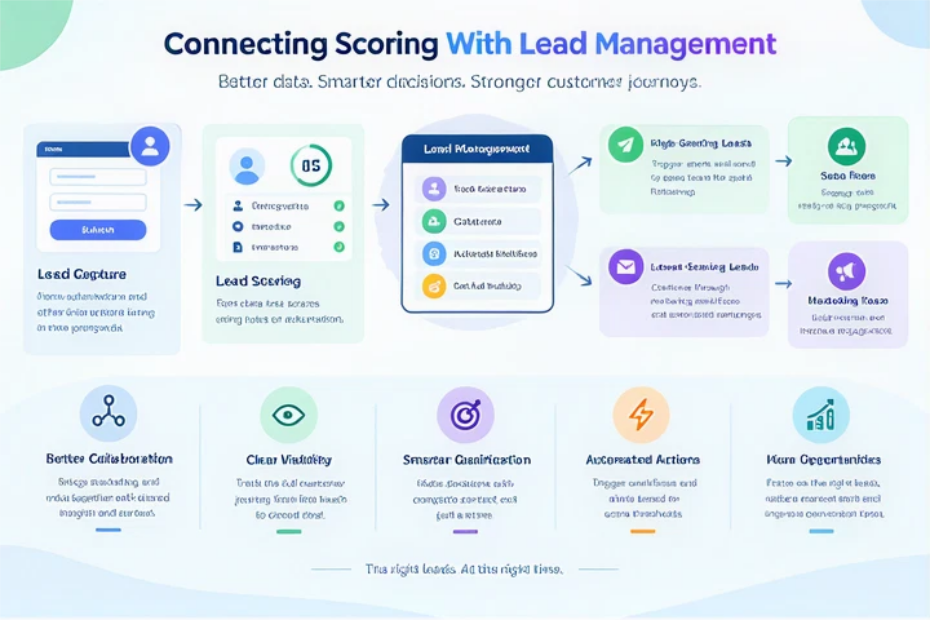
Connecting Scoring With Lead Management
Effective scoring works best within a connected process. Lead information should remain organised throughout qualification. Teams need visibility into prospect interactions and activity. They also need context behind individual scoring decisions. A structured lead management process supports better collaboration. Marketing teams can identify prospects who are becoming more engaged. Sales representatives can understand previous prospect interactions. Lead Tracking From Form Submission to Sale explores this journey in greater detail.
Scoring should connect with broader lead management activities. Automated actions can trigger based on specific scoring thresholds. Sales teams can receive alerts for stronger opportunities. Other prospects can continue through nurturing workflows. This reduces unnecessary coordination between marketing and sales. It also creates clearer visibility across customer journeys. A connected process makes qualification easier to manage.
Effective qualification also depends on useful lead information. Review AI Lead Qualification: Capture Better Leads Automatically for another automated qualification approach.
How To Measure Lead Scoring Performance
Scoring performance should connect directly with business outcomes. Conversion rates provide an important performance indicator. Sales response times can reveal workflow improvements. Teams should also evaluate overall lead quality. Comparing scores against conversions can reveal scoring gaps. Businesses should review these results regularly. This helps identify patterns requiring scoring adjustments. It also keeps qualification aligned with business objectives.
Businesses should avoid focusing on scores alone. A high score does not guarantee immediate conversion. Customer circumstances can influence final purchasing decisions. Sales representatives should therefore review relevant prospect context. Sales team feedback can improve scoring models. Marketing teams can identify useful behavioural patterns. Continuous measurement helps maintain effective qualification processes.
Conclusion
Predictive lead scoring changes how businesses prioritise prospects. It moves qualification beyond fixed manual scoring rules. AI can analyse complex behavioural patterns more efficiently. This helps teams identify promising opportunities sooner. Automation reduces repetitive administrative responsibilities significantly. However, predictive systems depend heavily upon quality data. They also require monitoring and human oversight. Manual scoring still works well within simpler environments. Predictive approaches become valuable as complexity increases. Businesses should choose models based on genuine requirements. The right approach should improve qualification and sales efficiency.
Frequently Asked Questions
Predictive lead scoring uses data to predict lead quality. It analyses behavioural patterns across customer interactions. Historical outcomes help identify patterns linked with conversions. This creates more dynamic qualification than fixed rules.
Manual lead scoring uses predefined qualification rules. Teams assign points based on selected prospect characteristics. These characteristics can include behaviour and engagement. Sales teams then review scores before contacting prospects.
AI lead scoring analyses multiple signals from lead activity. It compares current behaviour against historical customer outcomes. The system identifies patterns associated with stronger conversion potential. Teams can prioritise prospects based on predicted intent.
Automated lead scoring reduces repetitive scoring and review tasks. Sales teams receive prioritised leads without manual calculations. This allows representatives to spend more time selling. Faster prioritisation can also improve prospect response times.
Predictive scoring becomes useful when lead complexity increases. Large databases can also benefit from automated analysis. Businesses need sufficient historical data for reliable predictions. Teams should monitor results and adjust accordingly.