 ChatGPT
 Perplexity
 Grok
Grok
 Google AI
Not every lead deserves immediate sales attention. Teams often waste valuable time reviewing weak prospects. AI lead scoring helps solve this problem. It quickly identifies leads showing stronger buying signals.
Traditional scoring often depends on fixed rules and manual reviews. These methods can miss changes in customer behaviour. AI analyses multiple signals and recognises useful patterns. This makes lead qualification faster and more consistent.
With the right setup, automation can simplify this process. Businesses can score leads and automatically trigger actions. Here is how to quickly set up AI lead scoring.
What Is AI Lead Scoring?
AI lead scoring ranks prospects according to conversion potential. The system analyses information about each individual lead. It can consider demographics, behaviour, engagement, and buying signals. It then produces a score using these combined signals. Website visits can influence a prospect’s overall score. Pricing-page visits may indicate stronger commercial interest.
Form submissions can provide valuable qualification information. Email engagement can also reveal increasing interest. AI combines these signals to create a broader picture. This helps sales teams prioritise promising prospects more effectively.
Traditional lead scoring usually follows predetermined rules. AI can instead identify relationships among several signals. This makes scoring more flexible and predictive. Businesses can therefore prioritise leads using meaningful data.
How Does AI Lead Scoring Work?
AI analyses information from different lead sources. It identifies patterns linked with successful conversions. The system then assigns scores to individual prospects. Higher scores usually indicate stronger conversion potential. Sales teams can prioritise leads using these scores. The system can also trigger actions automatically. This creates faster and more consistent qualification.
Why Use Automated Lead Scoring?
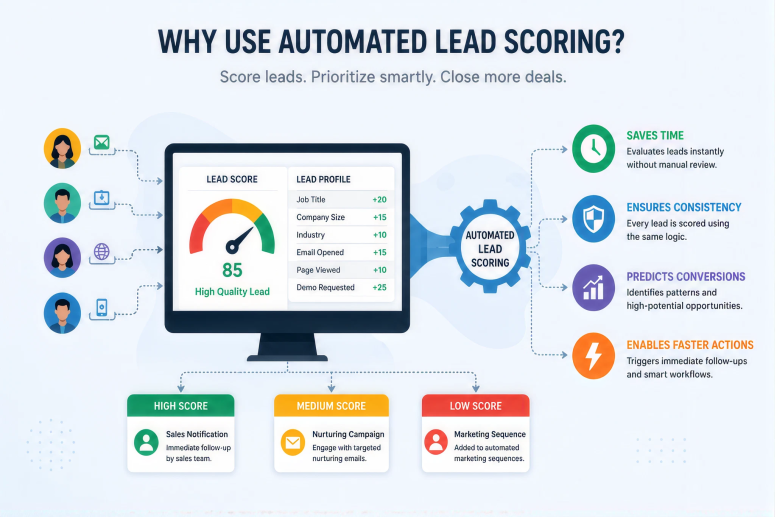
Automated lead scoring saves valuable time for sales teams. It evaluates new prospects without manual review. This helps representatives respond faster to promising opportunities. Automation also creates consistency across the qualification process. Every prospect receives evaluation using the same scoring logic.
Predictive lead scoring can identify patterns linked with conversions. Teams can focus resources on stronger opportunities. Lead-scoring automation also enables faster follow-up actions. High-scoring leads can trigger immediate sales notifications. Medium-scoring leads can enter nurturing campaigns. Lower-scoring leads can remain in marketing sequences.
How to Set Up AI Lead Scoring in 5 Minutes
You can create a basic scoring system using five steps. Start with clear goals before selecting scoring signals. Keep the first version simple and easy to understand. You can improve it later using conversion data.
Step 1: Define Your Ideal Customer
Start by identifying customers who generate strong business results. Review their industries, company sizes, and job roles. Then examine their behaviour before becoming customers. Look for repeated patterns across successful accounts. These patterns can guide your initial scoring criteria. Focus on characteristics shared by your best customers. This creates a stronger scoring foundation.
Step 2: Choose Your Lead Scoring Criteria
Select signals that show genuine buying interest. These signals should support practical sales decisions. Common criteria include industry, company size, and job title. Website activity can reveal stronger behavioural intent. Pricing-page visits may indicate commercial interest. Form submissions can provide stronger qualification information. Avoid adding every available data point. Focus on signals that influence conversions.
Step 3: Connect Your Lead Data
Your AI system needs reliable information to produce useful scores. Connect your forms, CRM, and marketing platforms together. This creates a consistent flow of lead information. It also reduces manual data entry between systems. Your forms can capture important qualification information. AI can then analyse these signals automatically. LeadXForms supports integrations with several business platforms. These connections can support automated lead workflows.
Step 4: Build Your AI Lead Scoring Model
Create scoring categories around your most important signals. You might score profile fit, engagement, and buying intent. Give each category an appropriate level of influence. Stronger buying signals should receive higher scores. Profile fit could represent thirty percent, for example. Engagement could represent another thirty percent. Buying intent could represent the remaining forty percent. Adjust these percentages according to your business needs.
Step 5: Automate Actions Based on Scores
Decide what happens after each lead receives its score. High scores can trigger immediate sales notifications. Medium scores can enter targeted nurturing campaigns. Lower scores can remain within marketing sequences. This turns scoring into practical lead scoring automation. Your system does more than rank potential customers. It also determines the next appropriate action. This creates a smoother sales engagement process.
AI Lead Scoring Example
Imagine a software company receives fifty leads daily. Its sales team previously reviewed every submission manually. This process consumed several hours each day. The company decides to introduce automated lead scoring. It creates three scoring categories for its model. These categories measure profile fit, engagement, and buying intent.
One prospect visits the pricing page twice. They then download a product guide. Finally, they submit a consultation form. The AI system recognises these combined signals. It assigns the prospect a high score. Sales receives an automatic follow-up notification.
Another prospect downloads only a basic checklist. Their score remains lower because intent appears weaker. Marketing can continue nurturing that prospect automatically. This helps sales prioritise valuable opportunities. It also reduces missed high-intent leads.
How to Improve Your Lead Scoring Model
Your first scoring model should not remain unchanged. Review its performance using actual conversion data. Compare high-scoring leads against successful customers. Look for patterns that predict successful conversions. Remove signals that rarely influence purchasing decisions. Increase the weight of signals linked to conversions. You can also learn more about using AI to prioritise high-quality leads.
Sales feedback should also influence your scoring strategy. Sales representatives understand qualified lead behaviour. They can identify scores that do not match conversations. Marketing teams can provide additional behavioural insights. Together, these insights can create stronger qualification rules. Regular reviews keep your model relevant as customers change.
AI Lead Scoring vs Traditional Lead Scoring
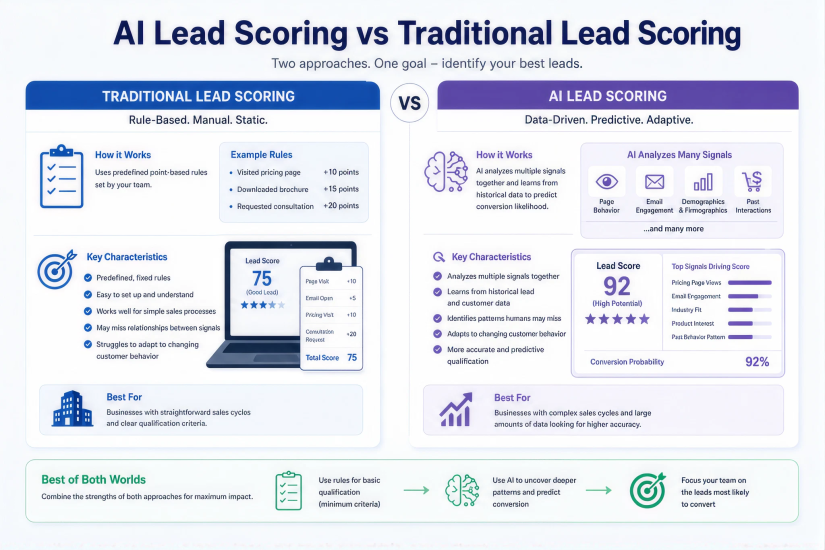
Traditional lead scoring uses predefined point-based rules. Businesses decide how many points actions receive. A pricing visit might receive ten points. A consultation request might receive twenty points. This approach remains useful for simple sales processes.
Teams can understand traditional scoring rules easily. Businesses can implement these systems without complex technology. However, fixed rules can overlook relationships between signals. They may also struggle with changing customer behaviour.
AI can analyse several signals together and identify patterns. It can learn from historical lead and customer data. This supports more flexible and predictive qualification. Businesses can also combine both approaches effectively. Fixed rules can establish basic requirements. AI can identify additional behavioural patterns.
Common AI Lead Scoring Mistakes to Avoid
One common mistake involves creating an overly complicated model. Too many criteria can make scores difficult to understand. Sales teams may struggle to trust the system. Start with fewer signals that influence buying decisions. Another mistake involves treating every action equally. A pricing-page visit may show stronger commercial intent.
Businesses should also avoid relying only on demographic information. Customer behaviour can provide stronger intent signals. Data quality also deserves regular attention. Incorrect information can weaken scoring accuracy. Review your scoring performance regularly. Update criteria when customer behaviour and conversion patterns change.
How to Choose the Right Lead Scoring Software
The right lead scoring software should fit your workflow. Look for tools that integrate with current platforms. Strong integrations can reduce manual data transfer. They can also support reliable lead scoring automation. Consider whether the software provides flexible scoring options. Your business may need different criteria over time.
Clear reporting can help teams understand scoring performance. Easy adjustments can simplify ongoing optimisation. The software should also support practical sales workflows. Scores should trigger useful actions rather than create numbers. High-value leads should reach sales quickly. Other leads should receive suitable nurturing instead.
LeadXForms can support the lead capture stage. Its integrations can connect forms with business platforms. This can help create connected lead workflows.
Conclusion
AI lead scoring can make lead qualification faster and consistent. It helps businesses identify prospects with stronger buying signals. It can also reduce repetitive work for sales teams. This allows teams to focus on valuable conversations.
The setup does not need to become complicated. Define your ideal customer and select meaningful criteria. Connect your lead data and create a simple scoring model. Then automate actions around different score ranges.
Review your results using real conversion data regularly. Adjust your criteria when customer behaviour changes. Over time, your model can become more accurate and useful. This creates a stronger foundation for efficient lead generation.
Frequently Asked Questions
AI lead scoring ranks leads according to conversion potential. It analyses customer data and behavioural signals. The system then assigns scores to individual prospects. Higher scores usually indicate stronger buying intent. Sales teams can prioritise these leads more effectively.
Automated lead scoring evaluates prospects without manual reviews. It uses selected customer and behavioural signals. The system assigns scores based on those signals. Businesses can then trigger actions automatically. This reduces repetitive qualification work for sales teams.
Common criteria include industry, company size, and job title. Website activity can provide useful behavioural information. Form submissions can indicate stronger buying interest. Pricing-page visits can also influence lead scores. Focus on criteria linked with actual conversions.
Predictive lead scoring estimates which prospects may convert. It analyses patterns within historical customer data. The system identifies signals linked with successful conversions. Businesses can then prioritise promising prospects. This approach becomes increasingly useful with larger datasets.
Yes, small businesses can use AI lead scoring. They can start with a simple scoring model. Focus on a few meaningful buying signals initially. Businesses can expand their criteria as data grows. This keeps implementation practical and manageable.