 ChatGPT
 Perplexity
 Grok
Grok
 Google AI
Every lead has potential. However, not every lead deserves immediate attention. Sales teams often waste valuable time on prospects who never convert. This slows growth and reduces overall sales performance.
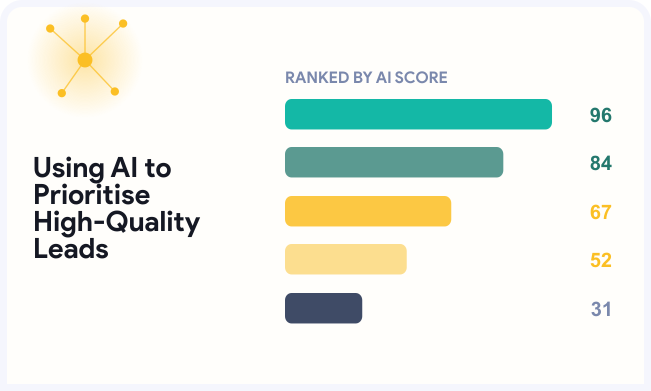
AI lead scoring changes that process. It analyses customer data, behaviour, and buying intent automatically. The technology identifies high-quality leads and ranks them by their likelihood to convert. Sales teams can then focus on opportunities with the greatest potential.
Businesses using AI lead scoring improve lead qualification and prioritisation. They respond faster, increase conversions, and use resources more effectively. This creates a more efficient sales process and supports long-term business growth.
What Is AI Lead Scoring?
AI lead scoring uses artificial intelligence to evaluate and rank potential customers. It analyses customer data, online behaviour, engagement, and buying signals. The system predicts which leads are most likely to convert. This helps businesses focus on opportunities with the highest value.
Unlike traditional lead scoring, AI lead scoring does not rely on fixed rules. Conventional methods assign points using manual criteria. These rules often become outdated as customer behaviour changes.
AI continuously learns from new data. It improves scoring accuracy over time. To learn more about automated qualification, read our blog AI Lead Qualification: Capture Better Leads Automaticall
AI also strengthens lead qualification by identifying genuine purchase intent. It evaluates multiple signals instead of basic demographic information. Sales teams gain better insights and greater confidence. This leads to faster follow-ups and higher conversion potential.
Why Traditional Lead Scoring Is No Longer Enough
Traditional lead scoring depends on manual inputs and predefined rules. Creating and updating these rules requires ongoing effort. Human judgement can also affect scoring consistency. This makes accurate lead prioritisation more difficult.
Static scoring models cannot adapt to changing customer behaviour. Modern buyers interact across multiple channels before purchasing. Traditional systems often overlook these valuable signals. AI learns from new interactions and adjusts scoring automatically.
Poor lead prioritisation wastes time and valuable sales resources. Sales teams chase low-quality prospects instead of qualified buyers. High-intent leads may receive delayed responses. AI lead scoring solves this challenge through intelligent, data-driven decisions.
How AI Lead Scoring Works
AI lead scoring analyses large amounts of customer data automatically. It identifies patterns that indicate buying intent. The system then assigns scores based on conversion potential. This helps sales teams prioritise the most valuable opportunities.
Collects Data from Multiple Sources
AI gathers information from websites, CRM systems, emails, and marketing platforms. It also tracks form submissions, social interactions, and previous purchases. Combining multiple data sources creates a complete customer profile. This improves scoring accuracy and lead qualification.
Analyses Customer Behaviour and Intent
AI studies how prospects interact with your business. It monitors website visits, email engagement, downloads, and product interest. These behaviours reveal buying intent more accurately. Sales teams can identify high-quality leads much earlier.
Uses Predictive Lead Scoring Models
Predictive lead scoring compares current prospects with successful customers. AI identifies common patterns and conversion signals. It predicts which leads have the highest chance of becoming customers. This allows sales teams to prioritise valuable opportunities confidently.
Continuously Improves Scoring Accuracy
AI learns from every customer interaction and sales outcome. It updates scoring models as new data becomes available. Unlike static systems, AI adapts to changing buyer behaviour. This keeps lead scores accurate and relevant over time.
Benefits of AI Lead Prioritisation
AI lead prioritisation helps businesses focus on prospects with the highest conversion potential. It analyses customer data and buying signals automatically. This improves lead qualification, increases productivity, boosts conversion rates, and supports faster, data-driven decisions.
- Identifies high-quality leads faster.
- Automates lead scoring and qualification.
- Improves sales team productivity.
- Increases lead conversion rates.
- Reduces time spent on low-quality leads.
- Aligns sales and marketing efforts.
- Supports smarter, data-driven decisions.
- Continuously improves scoring accuracy.
- Enables faster follow-ups with qualified prospects.
- Optimises sales resources and pipeline performance.
How to Prioritise Leads Using AI
AI delivers the best results when supported by a clear lead management strategy. Businesses should combine quality customer data with AI-powered automation. This helps identify high-value prospects and improve sales efficiency.
Define Your Ideal Customer Profile
Start by identifying the characteristics of your best customers. Include demographics, industry, company size, and buying behaviour. This gives AI a strong foundation for accurate lead qualification.
Connect Your CRM and Marketing Tools
Integrate your CRM with marketing platforms and other data sources. AI performs better when it accesses complete customer information. Connected systems also improve workflow automation and reporting.
Automate Lead Scoring
Allow AI to score leads using customer behaviour and engagement data. Automated lead scoring removes manual work and prioritises prospects instantly. Sales teams can focus on leads with the highest conversion potential.LeadX Forms helps businesses improve AI lead qualification by capturing, scoring, and routing qualified leads automatically.
Review and Refine AI Insights
Monitor AI recommendations regularly. Compare lead scores with actual sales outcomes. Refining your data and scoring models keeps results accurate over time.
AI Lead Scoring for Sales Teams
AI lead scoring helps sales teams spend more time selling. It highlights prospects most likely to convert and reduces time wasted on low-value opportunities. This improves productivity and creates a healthier sales pipeline.
- Prioritise follow-ups based on lead scores.
- Focus on high-intent prospects first.
- Reduce time spent on unqualified leads.
- Improve pipeline visibility and management.
- Increase productivity through smarter prioritisation.
- Close more deals with better-qualified opportunities.
Common Challenges and Best Practices
AI lead scoring performs best with reliable data and regular optimisation. Businesses should treat AI as a decision-support tool rather than a replacement for human expertise. Following best practices ensures accurate lead scoring and consistent results.
Maintain High-Quality Data
Keep customer records accurate, complete, and up to date. Remove duplicate or outdated information regularly. Clean data improves AI lead scoring accuracy.
Combine AI with Human Expertise
Use AI recommendations alongside sales experience. Human judgement provides valuable context that AI may overlook. Together, they create stronger lead qualification decisions.
Monitor Performance Regularly
Review scoring performance and conversion results consistently. Track key metrics and identify improvement opportunities. Regular optimisation keeps AI aligned with changing customer behaviour.
Choosing the Right AI Lead Scoring Solution
The right AI lead scoring solution should match your business goals and sales process. Look for a platform that improves lead qualification while supporting long-term growth. The following features are essential when comparing solutions.
- Seamless CRM integration for centralised customer data.
- Custom scoring models tailored to your business.
- Automated lead scoring and workflow automation.
- Real-time reporting and performance analytics.
- Scalable features that grow with your business.
- Easy integration with marketing and sales tools.
- User-friendly dashboards and actionable insights.
Conclusion
AI lead scoring helps businesses identify and prioritise high-quality leads with greater accuracy. It replaces manual processes with intelligent, data-driven decisions that improve lead qualification and sales performance. As customer expectations continue to evolve, AI provides a smarter way to manage growing sales pipelines.
Businesses that adopt AI lead scoring can improve productivity, increase conversions, and strengthen collaboration between sales and marketing. Investing in AI-powered lead management today creates a stronger foundation for long-term business growth.
Frequently Asked Questions
AI lead scoring uses artificial intelligence to evaluate and rank leads based on their likelihood to convert. It analyses customer data, behaviour, and engagement to help sales teams prioritise valuable prospects.
Predictive lead scoring uses machine learning to analyse historical customer data and buying patterns. It predicts which new leads are most likely to become customers, allowing sales teams to focus on high-potential opportunities.
Yes. AI identifies high-quality leads by analysing customer behaviour, engagement, demographics, and purchase intent. It continuously updates lead scores as new data becomes available.
Yes. AI lead scoring helps small businesses prioritise limited sales resources effectively. It improves lead qualification, automates manual tasks, and increases the chances of converting qualified prospects.
AI analyses information from CRM systems, website activity, email engagement, marketing campaigns, social interactions, purchase history, and other customer touchpoints. This creates more accurate and reliable lead scores.