 ChatGPT
 Perplexity
 Grok
 Google AI
Cold traffic does not know your business yet. These visitors may need more information first. They may also compare several available options. Pushing sales messages too early can lose interest. A better approach builds familiarity before asking for commitment.
A clear funnel can guide this process. It moves visitors through several meaningful stages. Each stage should answer a different customer need. This creates a smoother path towards lead conversion. It also gives businesses more opportunities to build trust.
Why Cold Traffic Needs A Different Approach
Cold traffic usually arrives without an existing relationship. Visitors may discover your business through campaigns. They may also encounter your content for the first time. Their interest may still be uncertain at this stage. They need reasons to continue exploring your offer.
A direct sales pitch may create resistance. Visitors may not understand your value yet. They may also lack enough information for decisions. Your funnel should therefore build interest gradually. Each interaction should make the next step easier.
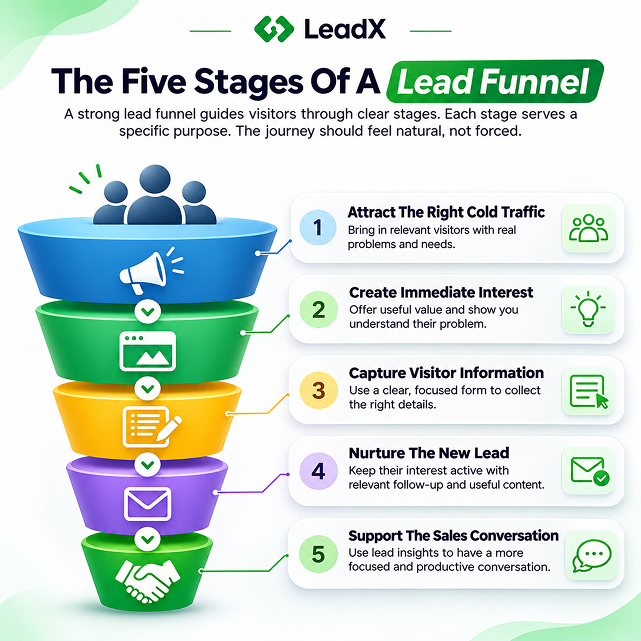
The Five Stages Of A Lead Funnel
A strong lead funnel guides visitors through clear stages. Each stage serves a specific purpose. The journey should feel natural, not forced.
Stage One — Attract The Right Cold Traffic
Start by attracting people with relevant problems. Your message should match their existing needs. Avoid attracting visitors with misleading promises. Poor traffic creates weaker opportunities later. Relevant visitors provide stronger foundations for lead generation.
Stage Two — Create Immediate Interest
Your first experience should give visitors useful value. Show them that you understand their problem. Explain the issue without immediately selling your solution. Useful content can encourage visitors to explore further. This begins turning cold traffic into engaged prospects.
Stage Three — Capture Visitor Information
Once interest develops, offer a clear next step. A useful form can capture relevant visitor information. Keep the requested information appropriate for that stage. Too many questions can create unnecessary friction. A focused form can support stronger lead capture.
Stage Four — Nurture The New Lead
New leads may still need more information. They may not feel ready to make decisions. Relevant follow-up can keep their interest active. Educational content can answer common questions. This helps move prospects towards warmer buying intent.
Stage Five — Support The Sales Conversation
Warm leads show stronger interest and engagement. They may request details, pricing, or demonstrations. Sales teams can then use available lead information. Relevant context makes conversations more focused. This creates a smoother path towards conversion.
Turning Attention Into Lead Capture
Cold traffic needs a clear reason to act. Your offer should match the visitor’s current needs. It should also provide enough value to justify the exchange. A useful resource can encourage visitors to submit details. Strong calls to action can then guide the next step.
The capture point should remove unnecessary friction. Ask only for information you genuinely need. Explain what visitors receive after submitting. Make the next step clear and predictable. These details can improve the overall funnel experience.
How Many Fields Should Your Lead Form Have?
What Makes A Lead Ready For Nurturing?
Not every new contact needs immediate sales attention. Some leads require more education and reassurance. Others may already show stronger purchase interest. Understanding this difference helps teams respond appropriately.
Useful signals can include repeated website engagement. Content downloads can also indicate growing interest. Detailed enquiries may show stronger buying intent. Form responses can provide additional qualification context. These signals help determine suitable follow-up actions.
Building The Lead Nurturing Funnel
Lead nurturing keeps prospects engaged after capture. It should reflect their questions and buying stage. Generic messages can quickly lose relevance. Useful communication should match their interests instead.
Start With The Problem
Early nurturing should address the visitor’s main challenge. Educational content can explain possible solutions. Avoid pushing products before you build enough context. Helpful information gives prospects reasons to continue. It also establishes your business as relevant.
Introduce The Solution
Once prospects understand their problem, introduce solutions. Explain how different approaches can address their needs. Focus on practical benefits rather than constant promotion. Prospects should understand what your solution can change. This creates stronger interest in the next interaction.
Address Common Concerns
Prospects often hesitate before making decisions. They may question costs, implementation, or suitability. Your nurturing content should address these concerns directly. Clear answers can reduce uncertainty during evaluation. This helps warm leads move towards stronger intent.
Identify Buying Signals
Engagement can reveal when prospects become more interested. Repeated interactions may indicate stronger consideration. Detailed form responses can provide useful context. High-intent actions deserve more focused follow-up. Sales teams can then prioritise appropriate opportunities.
Lead Nurturing 101: From First Touch to Sale
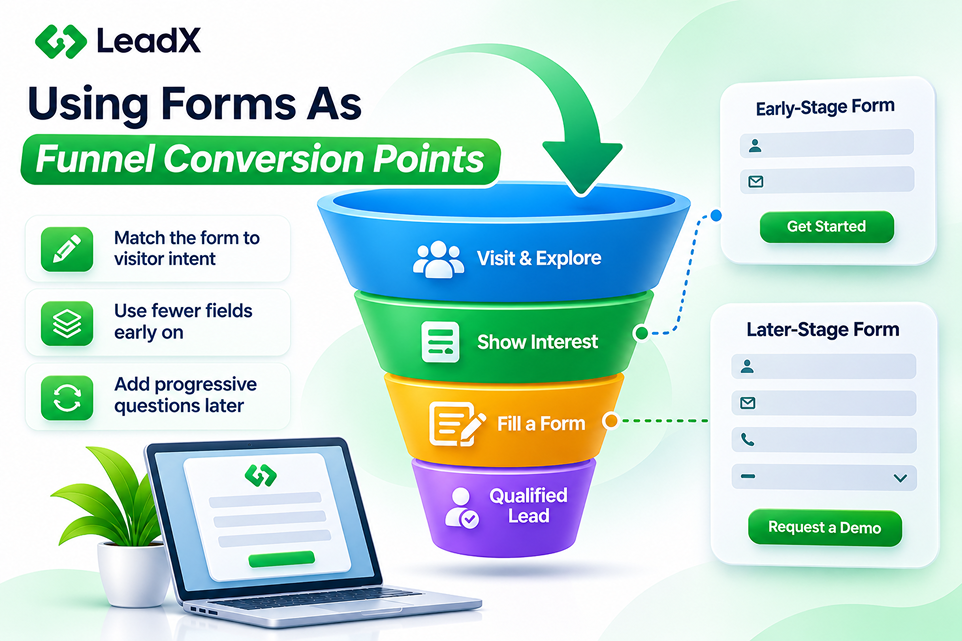
Using Forms As Funnel Conversion Points
Forms play an important role within many funnels. They give visitors a chance to identify themselves. They can also collect information for later qualification. The form should match the visitor’s current intent.
A simple early-stage form may need fewer fields. Later stages can request more useful qualification details. Progressive questions can also make longer journeys easier. This approach keeps the experience focused throughout the funnel.
Multi-step forms vs single-step forms
Moving Warm Leads Towards Conversion
Warm leads already understand your business better. They may also recognise the value of your solution. However, interest does not guarantee immediate conversion. The next step should match their demonstrated intent.
Sales teams should use available lead information carefully. Previous responses can reveal useful customer context. This can make follow-up more relevant and direct. Timely communication can also prevent leads from going cold. A connected process supports smoother lead conversion.
Lead Tracking From Form Submission to Sale
How To Measure Cold Traffic Conversion
Traffic volume alone does not show funnel performance. You need metrics across the complete journey. Start by measuring visitor engagement and capture. Then examine nurturing and conversion outcomes.
Useful measurements can include several funnel signals:
- Traffic shows how many visitors arrive.
- Engagement shows whether visitors interact meaningfully.
- Capture rate shows successful lead generation.
- Qualification rate shows lead quality.
- Nurturing engagement shows continued interest.
- Conversion rate shows final lead outcomes.
Compare these metrics across relevant campaigns. This helps identify where prospects leave. It also reveals where the funnel needs improvement. Regular analysis can support better conversion decisions.
Common Funnel Mistakes To Avoid
Many funnels lose prospects because of avoidable issues. Businesses sometimes focus heavily on traffic volume. They then overlook what happens after visitors arrive. Others push sales messages before building enough interest.
Common mistakes include:
- Targeting visitors without clear intent.
- Sending traffic towards unclear landing pages.
- Asking for too much information immediately.
- Using generic follow-up messages.
- Ignoring lead qualification signals.
- Delaying responses to interested prospects.
- Measuring traffic without tracking conversions.
Fixing these issues can strengthen the complete journey. Each improvement should support the next funnel stage. The goal is steady movement towards stronger intent.
Building A More Connected Lead Journey
A successful funnel connects each visitor interaction. Traffic should lead towards meaningful engagement. Engagement should create opportunities to capture leads. Captured leads should receive relevant nurturing. Stronger prospects should then reach sales teams.
Best Lead Capture Strategies for Small Businesses
A connected approach also improves lead visibility. Teams can understand where prospects entered the funnel. They can track engagement across later stages. This creates better context for follow-up. It also reduces gaps between marketing and sales.
How LeadX Forms Supports Lead Generation
LeadX Forms helps businesses capture visitor information. It supports forms built around lead-generation goals. Businesses can collect useful information during conversion. That information can support later qualification and follow-up.
Forms can become key conversion points in the funnel. Businesses can create experiences around different visitor needs. Better capture can provide stronger context for nurturing. This supports a more connected lead journey.
Conclusion
Cold traffic needs more than immediate sales messaging. Visitors first need relevance, value, and useful information. A structured funnel can guide them gradually. Lead capture creates the foundation for nurturing. Nurturing then helps identify stronger buying intent. A connected process can support better lead conversion.
Frequently Asked Questions
Cold traffic includes visitors unfamiliar with your business. They may have limited awareness of your offer. These visitors usually need more information before converting.
Start with relevant content and useful value. Then create clear opportunities to capture leads. Continue nurturing prospects with relevant follow-up. This process can build stronger buying interest.
A lead funnel guides visitors towards becoming qualified leads. It usually includes traffic, engagement, capture, and nurturing. Later stages can move qualified leads towards sales.
A lead nurturing funnel keeps captured prospects engaged. It provides information based on their needs. It can also identify stronger buying signals over time.
Businesses should reduce friction throughout the funnel. They should also improve lead capture and nurturing. Tracking each stage can reveal opportunities for improvement.